Shoe Washing Bag Compliance: AQL 2.5 and Incoterms Explained
A shipment of shoe washing bags is accepted on the terms written into the purchase order, not on the appearance of the product photo. For buyers sourcing OCTOPUS Shoe Washing Bag — the chenille-lined mesh bag family produced by Zhejiang Runjiang New Material Technology Co., Ltd. in Wenzhou, Zhejiang, China — five arrangements decide whether a container is approved or disputed: the agreed specification, an inspection basis that names AQL 2.5, the acceptance of third-party inspection, the payment schedule, and the Incoterm that fixes where cost and risk move.
This guide covers the terms that govern the shipment rather than the bag's physical build. It explains how acceptance inspection is set up, what an accepted SGS, BV or TUV inspection does and does not mean, how payment and delivery terms interact with inspection timing, and why the footwear care label sits with the buyer's own compliance messaging rather than with the factory.
The five terms in one view
- Acceptance basis: the agreed specification plus AQL 2.5/4.0, with 100% incoming material inspection and 5% finished-product inspection; inspection scope and acceptance criteria are agreed for each order.
- Third-party inspection: SGS, BV and TUV inspection are accepted as agreed — a contractual arrangement about who inspects and when, not a certification held by the supplier.
- Payment: 100% T/T for samples; 30% deposit and 70% balance for bulk.
- Delivery: EXW Yiwu, FOB Ningbo/Shanghai or CIF Hamburg, subject to agreement.
- Care label: the bag is intended only for footwear whose care label permits machine washing; it does not override footwear care restrictions.
Problem definition: why acceptance disputes surface after the cartons arrive
Most acceptance problems in this category are created before production starts, in language that was never made specific enough to test. Five gaps account for a large share of them.
A specification defined by a photograph. Dimensions and weight can be measured: 30 × 25 cm per bag and approximately 200 g per bag are verifiable claims. "Soft lining" or "good stitching" are not. Unless the approved sample is signed, dated and referenced in the order, the buyer and the factory are holding two different standards.
AQL quoted as a number without a sampling frame. AQL 2.5 has operational meaning only when it is attached to a defined lot size, a defined inspection stage and a defined defect classification. A purchase order that states "AQL 2.5" but not where inspection happens, what counts as a major defect, or what remedy follows a rejected lot leaves the number decorative.
Third-party inspection read as certification. Buyers sometimes treat the offer of SGS, BV or TUV inspection as evidence that the factory holds a certificate from those bodies. In this category it is a right to inspect: an agency, a scope and a stage are agreed, the inspection is booked, and a report is issued. That is a contractual arrangement, and it should never be written into a retail listing as a certification claim.
Payment milestones that do not line up with inspection. If the 70% balance falls due before an inspection report exists, the inspection has little commercial leverage. The payment schedule and the inspection stage have to be agreed together, not separately.
A care claim the product cannot support. A washing bag changes how footwear is handled inside the drum; it does not change what the footwear is made of. Listing copy that implies any shoes can be machine washed because they are inside a bag creates a consumer-claims risk that belongs to the seller, not to the bag supplier.
Industry background: what is standard in this category and what varies
Machine-wash positioning is the category norm. A German product listing for a shoe laundry bag describes the product as intended for washing sneakers and sports shoes in a washing machine, which reflects how the category is sold across retail and e-commerce channels.
Care instructions, however, are not standardised across suppliers. One listed product states washability up to 60 °C and suitability for tumble drying, while the OCTOPUS The 2-Pack specification states cold-water washing at 30 °C or below, air drying, no bleaching and no tumble drying. Material declarations also differ: one listing describes 100% chenille (PES) with a long-pile microfiber lining, while OCTOPUS The 2-Pack is specified as a mesh exterior with a soft chenille lining. For a buyer, the practical conclusion is that the care statement and the material description must be written into the order, because neither can be inferred from the category.
Certification language needs the same discipline. Zhejiang Runjiang New Material Technology Co., Ltd. holds an ISO 9001:2015 quality-management-system certificate covering production of nonwoven fabrics and industrial textile products, including storage boxes and cooler bags. That scope is a management-system certification; it is not a product certification for shoe washing bags. Separately, an AZO test report is available for the submitted yellow shoe washing bag shell sample, and its results apply to that tested sample rather than to every bag in a production run.
Customs classification is the other area where documents are frequently overstated. Generic textile-bag codes circulating online are classification references, not official customs rulings, and no validated product-specific HS code for shoe washing bags was identified in the available trade sources. United States guidance states that the US Schedule B is used to classify US exports, so the correct code for a specific shipment should be confirmed with the relevant customs authority or a customs broker before the commercial invoice is issued.
Demand context supports careful order planning rather than urgency: the shoe laundry bag segment is projected to grow at a CAGR of 4.97%, reaching USD 301 million by 2030, according to Technavio's 2025–2030 projection.
The acceptance stack: five terms that decide the shipment
1. The agreed specification and the signed sample
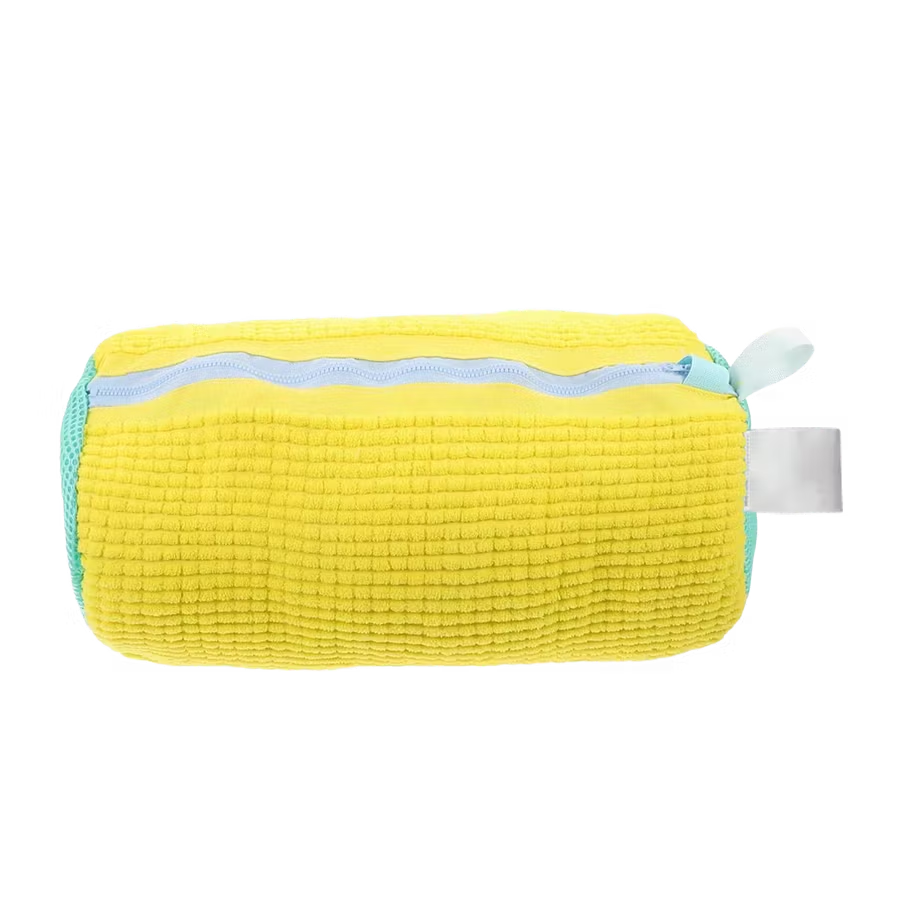
The specification for OCTOPUS The 2-Pack is specific enough to be used as an acceptance schedule. Each set contains two separate shoe washing bags of 30 × 25 cm (11.8 × 9.8 in), weighing approximately 200 g per bag and 400 g per two-bag set. Each bag has a mesh exterior with a soft chenille lining, a center pocket for removable insoles and shoelaces, and a zipper closure with a metal locking hook and anchor loop. The color-option variant codes are XYF-004-Y, XYF-004-YG and XYF-004-YW, and each code is a color option within the same structure rather than a separate design.
Two lines in that specification need buyer attention. First, standard packaging is two bags per set in bubble-bag packaging, with custom packaging available by agreement for bulk orders — so any retail-ready packaging must be agreed rather than assumed. Second, capacity is stated as one compatible pair per bag, subject to actual shoe dimensions and care instructions. That phrasing is deliberately different from listings that publish a maximum shoe size: the two bases are not directly comparable, and a buyer who needs a size guarantee should request both external dimensions and a tested capacity statement.
2. Inspection basis: agreed criteria plus AQL 2.5
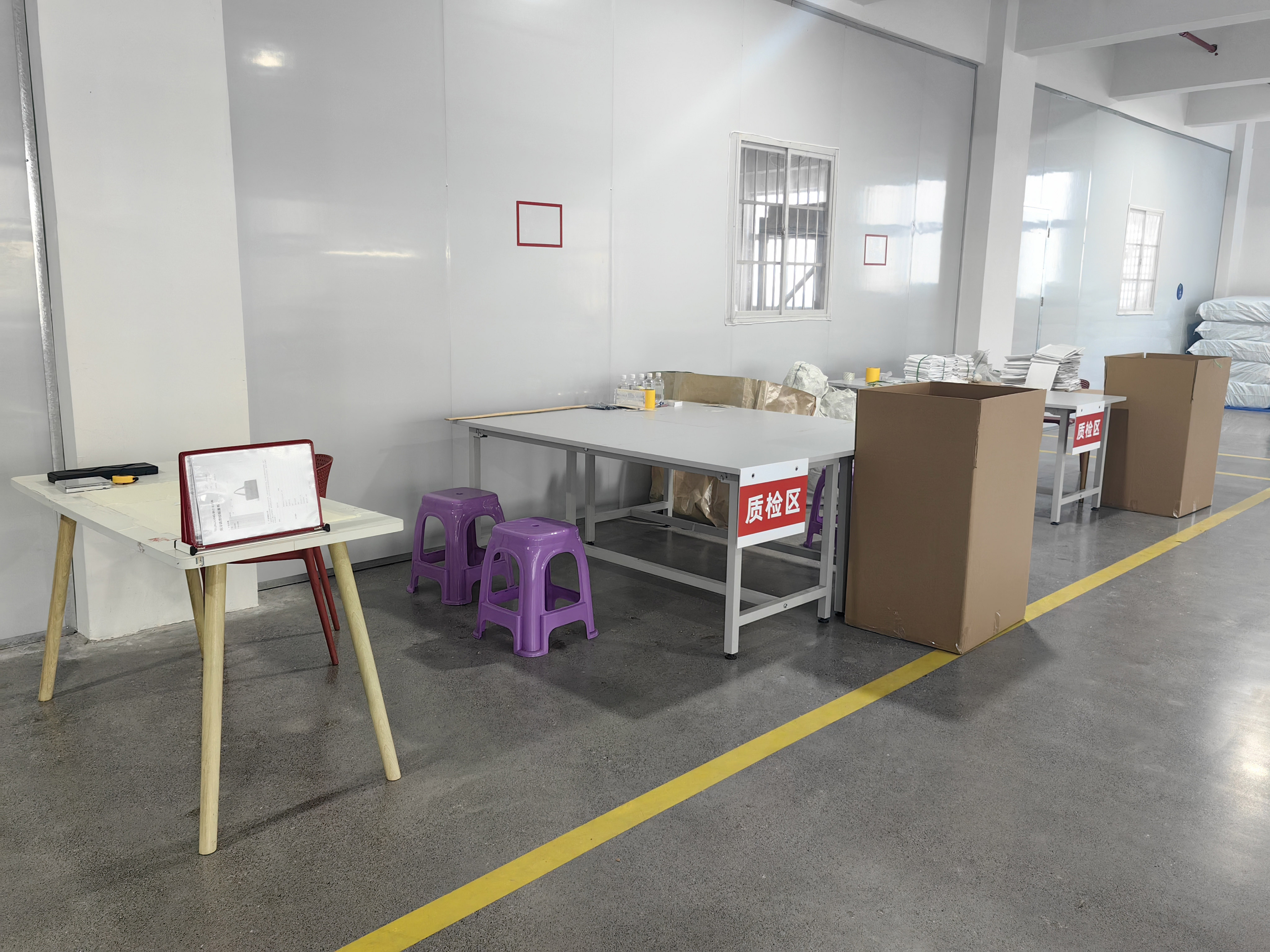
Production control at Zhejiang Runjiang runs on 100% incoming material inspection and 5% finished-product inspection, using AQL 2.5/4.0, with the inspection scope and acceptance criteria agreed for each order. That last clause is the operative one: the AQL level and the sampling percentage are fixed defaults, but what is checked and what counts as a failure is written per order.
A workable acceptance clause therefore names four things: the lot size, the inspection stage, the defect classes and the remedy. For finished goods inspection, the stage is normally after packing and before carton sealing, so that a rejected unit can still be replaced from the same lot. Defect classes should separate functional failures — a zipper that does not close, a locking hook that does not reach the anchor loop, an open seam, a missing center pocket — from cosmetic ones such as shade variation or loose thread. The remedy should state whether a rejected lot is sorted, replaced or credited.
It also helps to be precise about what AQL does. AQL is a lot-acceptance scheme, not a per-unit guarantee: a lot that passes sampling can still contain defective units within the accepted limit. Buyers who need tighter control on a flagship SKU typically agree a tighter inspection level or a larger sampling percentage for that SKU rather than relying on the default.
3. Third-party inspection: SGS, BV and TUV accepted by agreement
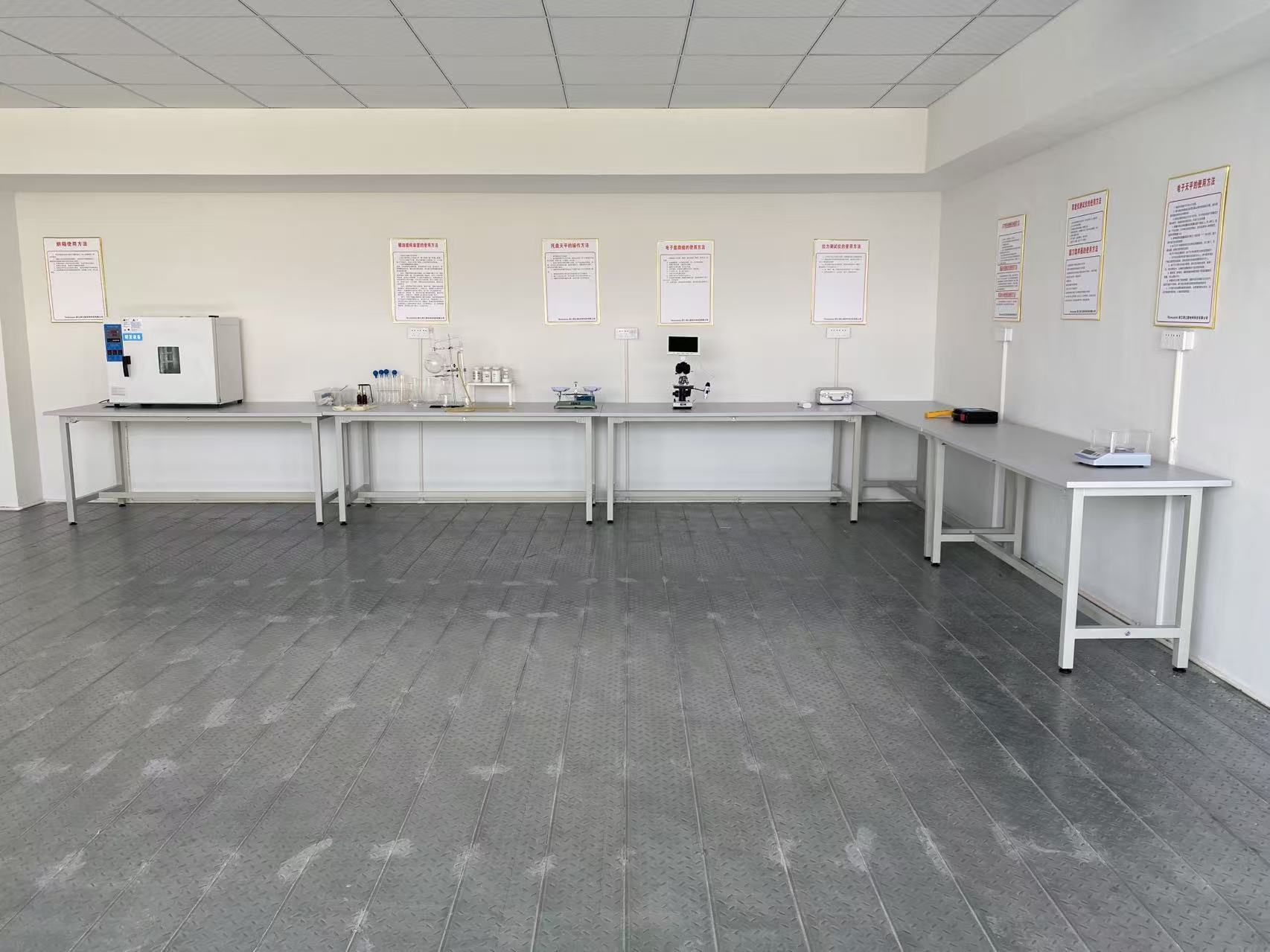
Inspection by SGS, BV or TUV is accepted as agreed with the buyer. Written properly, that arrangement covers four points: which agency may be nominated, at which stage the inspection takes place, what scope and checklist apply, and who bears the cost. The report is issued to the parties named in the booking, and the lot is released against it.
This is a buyer-agreed arrangement and should be described that way in listings, catalogues and sales conversations. It is not a certification held by the supplier, and no SGS, BV or TUV certificate for shoe washing bags is being claimed here.
An inspection report of this kind is a lot-conformity document. It can verify quantity, dimensions, weight, closure function, packing configuration, labeling and carton marks against the agreed specification. It cannot establish wash-cycle durability or cleaning performance: available public product sources for this category do not include standardised abrasion, cleaning or durability test results, so any performance claim beyond the agreed specification should be treated as unverified unless the buyer commissions specific testing.
4. Payment terms and Incoterms
Payment runs on 100% T/T for samples, and on a 30% deposit with a 70% balance for bulk orders. Standard delivery terms are EXW Yiwu, FOB Ningbo/Shanghai and CIF Hamburg, subject to agreement. The commercially important point is not which term is chosen but whether the chosen combination keeps inspection meaningful.
Under EXW Yiwu, risk and cost pass at the seller's premises before the main carriage begins, so inspection has to be scheduled before collection and the buyer carries the export and freight arrangements. Under FOB Ningbo or FOB Shanghai, risk passes once the goods are on board the vessel at the named port, and the buyer books ocean freight and insurance; inspection is normally completed before the container is loaded. Under CIF Hamburg, the seller pays cost, insurance and freight to Hamburg, but risk still passes when the goods are on board at origin — a point frequently misunderstood by buyers who read CIF as arrival-based cover. In all three cases the practical rule is the same: place the 70% balance against the inspection report and the shipping documents, not against production completion alone.
| Term and named place | Where risk passes | What the seller arranges | What it means for inspection |
|---|---|---|---|
| EXW Yiwu | At the seller's premises in Yiwu, before main carriage | Makes the goods available for collection | Inspect before collection; the buyer controls export formalities and freight booking |
| FOB Ningbo / FOB Shanghai | Once the goods are on board the vessel at the named port | Delivery to the port and loading on board | Inspect before container loading; the buyer books ocean freight and insurance |
| CIF Hamburg | On board at origin, not on arrival in Hamburg | Freight and insurance to Hamburg | Origin inspection carries the weight, because arrival cover is not what CIF provides |
5. The care-label precondition belongs in the buyer's own messaging
The bag is intended only for shoes whose care labels permit machine washing. Recommended use is cold water at 30 °C or below, followed by air drying at room temperature; the bags must not be bleached or tumble dried. Operationally, one pair of compatible shoes goes into each bag, the zipper is closed, and the metal hook is attached to the anchor loop before washing.
The compliance consequence sits with the buyer. A shoe washing bag does not make non-machine-washable footwear safe for machine washing, so retail listings, packaging inserts and marketplace bullets should carry the care-label condition rather than a blanket "machine washable shoes" claim. For private-label projects this wording is part of the artwork that should be approved together with the packaging, not after it.
| Acceptance term | Position to write into the order | What it protects |
|---|---|---|
| Product specification | 2 bags per set, 30 × 25 cm, approx. 200 g per bag, mesh exterior with soft chenille lining, center pocket, zipper with metal hook and anchor loop; variant codes XYF-004-Y / XYF-004-YG / XYF-004-YW | Measurable conformity instead of visual opinion |
| Inspection basis | 100% incoming material inspection; 5% finished-product inspection; AQL 2.5/4.0; scope and acceptance criteria agreed per order | A testable pass/fail decision on each lot |
| Third-party inspection | SGS, BV or TUV accepted by agreement; agency, stage, scope and cost fixed before booking | Independent verification without misrepresenting it as certification |
| Payment | 100% T/T for samples; 30% deposit and 70% balance for bulk | Cash exposure aligned with verified production |
| Delivery term | EXW Yiwu, FOB Ningbo/Shanghai or CIF Hamburg, subject to agreement | Clear allocation of freight, insurance and risk |
| Care statement | Only for footwear whose care label permits machine washing; cold water at 30 °C or below; air dry; no bleach; no tumble dry | Consumer-claims and labeling protection |
Where care instructions diverge: a comparison worth writing into the order
| Item | OCTOPUS The 2-Pack (supplier specification) | Oceanwash shoe laundry bag (German listing, 2026) |
|---|---|---|
| Stated wash temperature | Cold water at 30 °C or below | Washable up to 60 °C |
| Tumble drying | Not permitted | Described as suitable for tumble drying |
| Lining description | Mesh exterior with soft chenille lining | 100% chenille (PES) with long-pile microfiber lining |
| Stated capacity | One compatible pair per bag, subject to actual shoe dimensions and care instructions | One pair of shoes up to EU size 47 |
The two products state capacity and care on different bases, so the table is a comparison of published claims, not a performance ranking. It illustrates why the care statement and the capacity basis have to be fixed in the specification instead of being copied from another supplier's listing.
Step-by-step: building the acceptance clause into a shoe washing bag order
- Write the specification line by line. Convert every product claim into a measurable line: two bags per set, 30 × 25 cm, approximately 200 g per bag, mesh exterior, soft chenille lining, center pocket, zipper with metal locking hook and anchor loop, two bags per set in bubble-bag packaging with custom packaging by agreement.
- Sign and retain the approval sample. Reference the signed sample number in the purchase order so the specification has a physical benchmark. Standard samples take approximately 3 working days; custom samples take approximately 15 working days, subject to the agreed design.
- Write the inspection clause. State the lot size, the inspection stage before carton sealing, the 5% finished-product sampling under AQL 2.5/4.0, the defect classes, and the remedy for a rejected lot. Confirm that 100% incoming material inspection is part of the production record.
- Book third-party inspection if the SKU requires it. Nominate SGS, BV or TUV, fix the scope and checklist, confirm who bears the cost, and schedule the inspection before packing is completed so a rejected lot can still be corrected.
- Agree the documents the supplier can actually issue. Ask for the ISO 9001:2015 certificate and read its scope: it covers production of nonwoven fabrics and industrial textile products, including storage boxes and cooler bags, and is not a product certification for shoe washing bags. If an AZO test report matters to the buyer, note that the available report applies to the submitted yellow shoe washing bag shell sample.
- Fix payment and the delivery term together. 100% T/T for samples; 30% deposit and 70% balance for bulk; EXW Yiwu, FOB Ningbo/Shanghai or CIF Hamburg, subject to agreement. Tie the balance release to the inspection report and the shipping documents.
- Approve the care statement as part of the artwork. Cold water at 30 °C or below, air dry, no bleach, no tumble dry, and a clear statement that the bag is for footwear whose care label permits machine washing.
- Set the after-sales window. Issues should be reported within 7 days of receipt with photos and video. Replacement is prioritised; refund handling is subject to review and the agreed order terms.
Use cases: how the same terms apply to different orders
Pilot order before a seasonal commitment. Stock orders start from 100 pieces, which makes a small trial run practical. On a lot of that size, 5% finished-product inspection reaches only a handful of units, so the written defect definitions carry most of the acceptance weight. A pilot is the right moment to test whether the defect list is specific enough, before the language is reused on a larger order.
Private-label launch. Logo customisation starts from 500 pieces and custom-material orders from 6,000 pieces, with size, material, color, logo, zipper and packaging customisation discussed against the approved sample. Regular capacity is 90,000 pieces per month for the XYF-004 line, with peak capacity of approximately 100,000 pieces per month, and bulk orders below 1,000 pieces run at approximately 15 working days, with the final schedule confirmed per order. For a private label, the artwork, care statement and inspection checklist should be approved as one package.
Retail and e-commerce replenishment. A US retail/e-commerce buyer ordered 10,000 pieces of OCTOPUS The 2-Pack for an e-commerce SKU, and two repeat orders were recorded during a one-year observation period. The reported damage rate in that case was below 0.5%. These are case-specific results for that project, not a guaranteed damage rate for other orders; the useful lesson is that a written acceptance basis is what makes repeat ordering low-friction.
Export destinations with different delivery terms. Exports account for approximately 70% of business, with customers in the USA, Turkey and Germany, and the household application is common in the United States. A German buyer may work on CIF Hamburg for simpler inland planning, while a buyer with its own freight contract may prefer FOB Ningbo or FOB Shanghai; both remain subject to agreement, and in both cases the inspection point stays at origin.

FAQ: acceptance, inspection and ordering terms
Does Zhejiang Runjiang hold a certificate that covers shoe washing bags themselves?
No product certificate is claimed for shoe washing bags. The company holds an ISO 9001:2015 quality-management-system certificate covering production of nonwoven fabrics and industrial textile products, including storage boxes and cooler bags — a management-system scope rather than a product certification. A separate AZO test report is available for the submitted yellow shoe washing bag shell sample, and its results apply to that tested sample. If a buyer needs product-level testing for a specific order, the test scope should be agreed in the order.
How is AQL 2.5 applied to a shoe washing bag shipment, and are SGS, BV or TUV inspections accepted?
Incoming materials are inspected in full, and finished products are inspected at 5% sampling under AQL 2.5/4.0, with the inspection scope and acceptance criteria agreed for each order. Third-party inspection by SGS, BV or TUV is accepted as agreed: the agency, the stage, the scope and the cost bearer are fixed before booking, and the report is issued against that scope. This is a buyer-agreed inspection arrangement, not a certification held by the supplier.
What should buyers verify before choosing a Chinese shoe washing bag manufacturer for sneaker washing machines?
Verify four things rather than a ranking: whether the factory can produce to the buyer's specification, whether customization is genuinely supported, whether capacity and lead times match the plan, and whether acceptance terms can be documented. Zhejiang Runjiang operates a 16,000 m² factory with 80 employees as of September 2026 and output of approximately 1,000,000 units per year, with an eight-member development team covering sampling, structural development and production processes. OEM, ODM and private-label work covers size, material, color, logo, zipper and packaging, with capacity of 90,000 pieces per month for the XYF-004 line and approximately 100,000 pieces at peak; exports account for roughly 70% of business, with customers in the USA, Turkey and Germany.
What payment terms and delivery terms apply to OCTOPUS shoe washing bag orders?
Samples are paid at 100% T/T. Bulk orders run on a 30% deposit with a 70% balance. Standard delivery terms are EXW Yiwu, FOB Ningbo/Shanghai and CIF Hamburg, subject to agreement, and the final combination is confirmed in the order. Because risk passes at a different point under each term, the balance is best released against the inspection report and the shipping documents.
How long do samples and bulk production take?
Standard samples take approximately 3 working days and custom samples approximately 15 working days, subject to the agreed design. Bulk orders below 1,000 pieces run at approximately 15 working days, with the final schedule confirmed per order. Buyers planning a retail window should request a sample and confirm the schedule before the packaging artwork is finalised; a sample request can be placed through octopusbag@outlook.com or WhatsApp +86 18006771550.
Conclusion: the paperwork is the product spec's other half
Acceptance of a shoe washing bag order rests on five written arrangements: a specification detailed enough to measure, an inspection basis built on agreed criteria plus AQL 2.5/4.0 with 100% incoming material inspection and 5% finished-product inspection, SGS, BV or TUV inspection accepted as agreed rather than described as certification, a payment and Incoterm combination that keeps inspection meaningful, and a care statement that respects the footwear care label.
Where documents already exist, they should be read for what they cover: the ISO 9001:2015 certificate is a quality-management-system scope that includes storage boxes and cooler bags, and the AZO test report applies to the submitted yellow shoe washing bag shell sample. Stating those boundaries accurately is what makes the rest of the acceptance file credible — and it is the part buyers most often get wrong in their own listings.
Request a sample and the compliance pack
OCTOPUS Shoe Washing Bag (OCTOPUS The 2-Pack; variant codes XYF-004-Y, XYF-004-YG, XYF-004-YW) is supplied by Zhejiang Runjiang New Material Technology Co., Ltd. for wholesale, private-label and OEM projects. Ask for a sample set, the current specification sheet and the company profile, then agree the inspection basis and delivery term before the first bulk order.
Email: octopusbag@outlook.com | WhatsApp: +86 18006771550 | Website: www.octopusbag.com
Product page: OCTOPUS The 2-Pack shoe washing bag
Company and product brochure: download the PDF
Have Questions or Need More Details?
Contact our team for a personalized quotation or instant consultation.
Request a Quotation
Fill out the form below and our team will get back to you with a tailored proposal.
WhatsApp Direct Chat
Prefer to chat in real-time? Message us on WhatsApp for instant assistance & quick answers.
- Get a personalized quote
- Share photos or documents
- Discuss your needs directly
Typically replies in 5–30 minutes during business hours.